
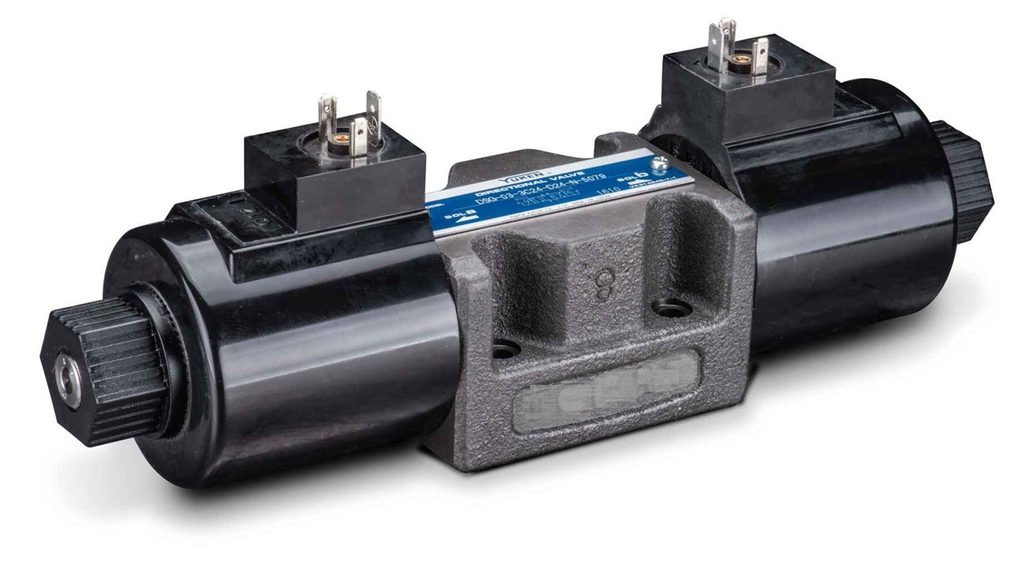
In the heavy-duty world of industrial machinery and mobile equipment, hydraulic systems rely on immense power and precise control to function safely and efficiently. At the heart of this control is a crucial component: the hydraulic directional control valve (DCV).
Whether it’s directing pressurized hydraulic oil to lift a massive excavator bucket, steer a tractor, or press metal in a manufacturing plant, these valves are the unsung heroes of hydraulic power. This blog will explore what a hydraulic directional control valve is, how it operates, the different types available, and how to choose the right one for your system.
What is a Hydraulic Directional Control Valve?
A hydraulic directional control valve is a mechanical device that dictates the path of hydraulic fluid (usually oil) within a system. It decides where the pressurized fluid goes, when it flows, and when it stops.
Think of a hydraulic DCV as the traffic controller of a hydraulic circuit. Just as a traffic cop directs vehicles to ensure smooth and safe movement on the roads, a DCV directs hydraulic fluid to ensure cylinders and hydraulic motors operate exactly as intended. They are foundational components in mobile hydraulics (like construction and agriculture equipment) and industrial hydraulics (like injection molding machines and steel mills).
How Does a Hydraulic Directional Control Valve Work?
At its core, a hydraulic directional control valve works by opening, closing, or redirecting internal passages to control the flow of hydraulic oil.
The valve consists of a heavy-duty body with several ports (openings where fluid enters and exits) and internal moving parts. The most common internal mechanism is a spool (a cylindrical sliding component with machured lands and grooves), though some high-flow valves use poppets (plug-like components). By shifting these internal parts, the valve can:
- Stop the flow entirely (blocking the ports to hold a load).
- Allow flow from the hydraulic pump to an actuator (cylinder or motor).
- Redirect the flow back to the hydraulic reservoir (tank) or to a different actuator.
Understanding “Ways,” “Positions,” and “Center Conditions”
To truly understand how hydraulic valves work, you need to know three key terms:
- Ways: The number of ports on the valve (e.g., a pump port, a tank port, and working ports connected to the cylinder).
- Positions: The number of distinct switching states the valve can hold.
- Center Condition: What happens to the fluid flow when the valve is in its neutral (center) position.
For example, a standard 4/3 valve has 4 ports (ways) and 3 switching positions (left shift, center neutral, right shift). In the center position, the valve might have an open center (allowing pump flow to pass straight through to the tank) or a closed center (blocking all flow, which is required for systems with multiple valves or variable displacement pumps).
Types of Hydraulic Directional Control Valves
Hydraulic directional control valves are primarily categorized by their internal design and how they are actuated (shifted).
1. By Internal Design
- Spool-Type Valves: The most common type in hydraulics. They use a sliding cylindrical spool inside a machined bore. They are excellent for high-pressure applications and offer precise metering of hydraulic flow.
- Poppet-Type Valves: These use spring-loaded plugs (poppets) that seat against a seal. They are highly resistant to contamination, offer excellent sealing (zero leakage), and are often used in high-flow or mobile hydraulic applications.
2. By Actuation Method (How the spool is shifted)
- Manual Valves: Operated by a human using a hand lever, knob, or foot pedal. Very common in the cabs of mobile equipment like cranes and tractors, or as emergency overrides on industrial machines.
- Solenoid Valves: Controlled electronically via an electromagnet. When an electrical current is applied, it shifts the spool. These are the backbone of modern automated hydraulic machinery and CNC equipment.
- Pilot-Operated Valves: Instead of using direct mechanical or electrical force, these use a small amount of “pilot” hydraulic pressure to shift the main spool. They are essential for high-flow, high-pressure applications where a direct solenoid wouldn’t generate enough force to move the spool.
- Mechanical Valves: Actuated by physical contact with a machine part, such as a cam, roller, or limit switch. Often used for sequencing operations on automated hydraulic presses.
Why Are Hydraulic Directional Control Valves Important?
Without DCVs, high-pressure hydraulic systems would be chaotic, inefficient, and incredibly dangerous. Their importance boils down to four key benefits:
- Efficiency: By ensuring hydraulic fluid flows exactly where it is needed without internal leakage or excessive pressure drops, DCVs maximize the power output and energy efficiency of the hydraulic system.
- Precision: They allow for micro-adjustments and accurate metering of hydraulic flow, which is absolutely vital for the smooth, jerk-free movement of heavy loads in manufacturing and construction.
- Safety: DCVs feature specific “neutral” configurations (like closed centers or tandem centers) that lock hydraulic fluid inside the cylinders, preventing uncontrolled movements, drifting, or dropped loads.
- System Protection: By properly routing flow and integrating with relief valves, DCVs prevent over-pressurization and protect expensive hydraulic pumps, hoses, and cylinders from catastrophic failure.
How to Choose the Correct Hydraulic Directional Control Valve
Selecting the right hydraulic valve is critical for system performance and longevity. When making your selection, consider the following factors:
- Pressure and Flow Capacity: The valve must be rated to handle the maximum system pressure (PSI/Bar) and the required flow rate (GPM/LPM). Undersizing a valve will cause severe pressure drops and heat generation; oversizing will waste money and space.
- Configuration (Ways, Positions, and Center): Determine how many ports you need and how many flow paths your application requires. Crucially, select the correct center condition (open, closed, tandem, float, etc.) based on your pump type and what you need the actuator to do when the valve is neutral.
- Actuation Method: Do you need direct manual control in a cab, or should it be integrated into a PLC-controlled automated system via a solenoid? If the flow is very high, you will need a pilot-operated design.
- Fluid Compatibility and Environment: Will the valve be exposed to extreme temperatures, corrosive chemicals, or heavy mud and dirt? Ensure the valve’s seals (e.g., Buna-N, Viton) are compatible with your specific hydraulic fluid, and check the IP ratings for electrical solenoids if used in washdown or outdoor environments.
Conclusion
A hydraulic directional control valve is much more than just a metal block with holes; it is the brain of your hydraulic system. By ensuring the precise movement of pressurized fluid, DCVs guarantee that your heavy machinery and industrial equipment work efficiently, accurately, and safely.
Whether you need a rugged manual spool valve for a mobile crane or a complex pilot-operated solenoid valve for an automated industrial press, choosing the right hydraulic directional control valve is critical for seamless, reliable operations.


