
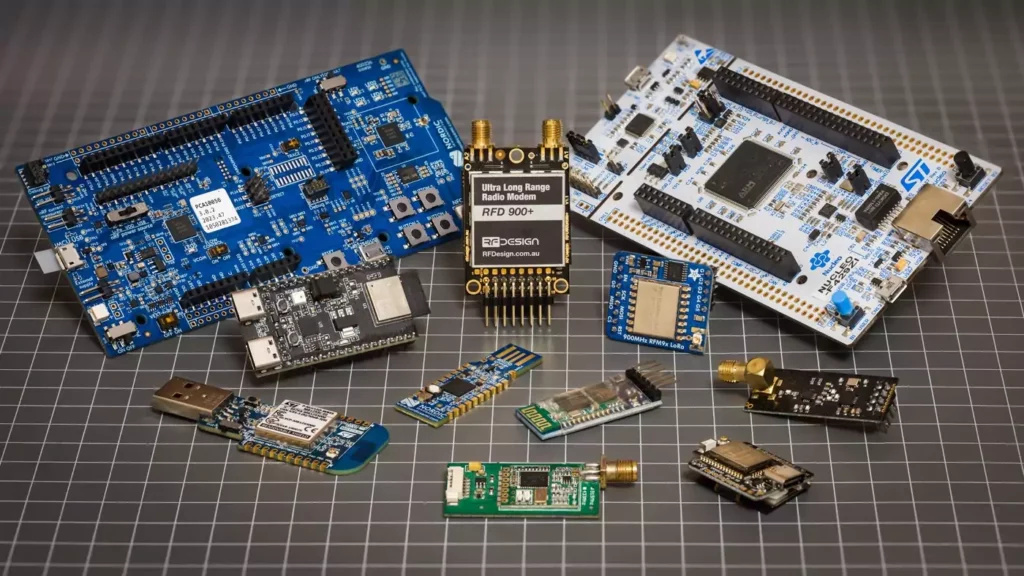
A microcontroller (MCU) is a small, integrated circuit designed to perform specific tasks in embedded systems. It combines a processor, memory, and input/output peripherals into a single chip, making it a versatile and efficient solution for controlling electronic devices. From household appliances to industrial machines, microcontrollers are the backbone of countless technologies we use every day.
What Makes Up a Microcontroller?
A microcontroller typically includes:
- CPU (Central Processing Unit): Executes instructions and processes data.
- Memory:
- Flash/ROM: Stores the program code.
- RAM: Holds temporary data during operation.
- I/O Peripherals: Interfaces with external devices. Common examples include:
- GPIO Pins (General-Purpose Input/Output)
- Analog-to-Digital Converters (ADC)
- Timers and PWM Modules (for precise control)
- Communication Interfaces (UART, SPI, I2C, USB)
- Clock Oscillator: Determines the operating speed of the microcontroller.
Applications of Microcontrollers
Microcontrollers are everywhere! Here are some common uses:
- Home Appliances: Microwaves, washing machines, and smart thermostats.
- Automotive Systems: Engine control units, airbags, and infotainment systems.
- Medical Devices: Pacemakers, glucose monitors, and diagnostic tools.
- Consumer Electronics: Wearables, drones, and gaming controllers.
- Industrial Automation: Robotics, sensors, and programmable logic controllers (PLCs).
- IoT Devices: Smart home systems, environmental sensors, and connected gadgets.
Advantages of Microcontrollers
- Compact Size: Fits into small devices.
- Low Power Consumption: Ideal for battery-operated applications.
- Cost-Effective: Affordable for mass production.
- Real-Time Operation: Responds quickly to inputs, making it perfect for control systems.
Popular Microcontroller Families
- Arduino (ATmega series): Great for beginners and hobbyists.
- Raspberry Pi Pico (RP2040): Offers high performance at a low cost.
- STM32 (STMicroelectronics): Popular for industrial and professional applications.
- PIC (Microchip): Known for its simplicity and reliability.
- ESP32 (Espressif): Ideal for IoT projects with built-in Wi-Fi and Bluetooth.
Getting Started with Microcontrollers
- Choose a Development Board: Start with beginner-friendly options like Arduino Uno or ESP32.
- Learn Programming: Use languages like C/C++ or MicroPython.
- Build Simple Projects: Begin with basic tasks like blinking an LED or reading a sensor.
- Scale Up: Gradually tackle more complex projects like home automation or robotics.
The Future of Microcontrollers
As technology advances, microcontrollers are becoming more powerful and energy-efficient. Innovations like TinyML (machine learning on microcontrollers) and enhanced connectivity options are opening up new possibilities for smart devices and IoT applications.

In Summary: Microcontrollers are the unsung heroes of modern electronics, enabling the functionality of countless devices we rely on daily. Whether you’re a hobbyist, student, or professional, exploring microcontrollers is a gateway to innovation and creativity.
Have you worked with microcontrollers? Share your favorite projects or tips in the comments!


