
We’ve all been there: You’re halfway through a long run, the machine goes into the ATC (Automatic Tool Changer), and instead of a smooth clack of the tool pulling into the spindle, you hear a sickening crunch. A dropped tool. Or maybe you walk up to the machine and the coolant smells like rotten eggs because compressor oil has contaminated the sump again.
When these things happen, we usually blame the pneumatic valves or the tooling. But 9 times out of 10, the real culprit is hiding right inside the electrical cabinet: bad shop air.
Modern CNC machines use Modular Compressed Air Treatment Units to clean the air before it touches the machine’s delicate internals. As the operator or first-line tech, understanding how this unit works and how to maintain it is the secret to avoiding mid-shift crashes and keeping your coolant clean.
Here is your no-nonsense guide to the modular air unit on your machine.
How It Works: What’s Actually Inside the Box?
Shop air coming from the main compressor is wet, dirty, and full of oil. If you feed that directly into your CNC, it will rust the ATC cam box, destroy the spindle air purge seal, and ruin your coolant.
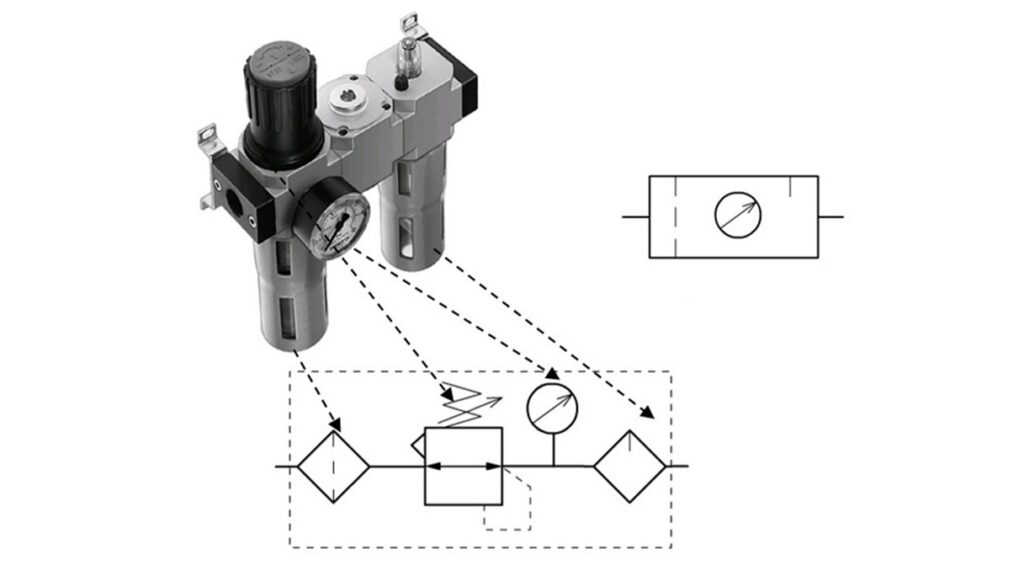
The modular air unit acts as a bouncer, cleaning the air in stages before it reaches the machine’s pneumatic manifold. Here is the step-by-step journey of the air:
1. The Pre-Filter (Catching the Big Stuff)
The first module is usually a general-purpose particulate filter. As air swirls through it, a centrifugal force throws heavy contaminants like rust from the shop’s main pipes, pipe scale, and large dust particles—against the walls and down into the collection bowl.
2. The Coalescing Filter (Squeezing Out the Oil)
Next, the air hits a coalescing filter. This element is designed to catch microscopic compressor oil aerosols. Tiny oil droplets merge (coalesce) into larger drops and are drained away. Why this matters to you: This is the stage that keeps compressor oil out of your coolant sump, preventing that foul-smelling tramp oil buildup.
3. The Air Dryer (Killing the Moisture)
This is the most critical part for the spindle and ATC. Depending on your machine, this is either a miniature refrigerated dryer or a membrane dryer. It drops the “dew point” of the air, literally pulling the water vapor out of it. This ensures the air purging the spindle bearings is bone-dry, keeping coolant from sneaking past the labyrinth seals.
4. The Regulator (Setting the Pressure)
Finally, the clean, dry air passes through a precision regulator. This guarantees that the air pressure hitting the ATC and workholding cylinders is perfectly steady, regardless of what the rest of the shop is doing with their air compressors. Consistent pressure means consistent tool-clamping force.
First-Level Maintenance: Your Shift Checklist
You don’t need to be a pneumatic engineer to keep this unit running, but you do need to do some basic housekeeping. Here is your first-level maintenance guide.
Daily: The 60-Second Check
- Check the Sight Glasses: Look at the clear bowls at the bottom of the filters. If they are full of water or dark, oily sludge, they need to be drained. Never let the liquid reach the top of the filter element, or it will get sucked back into the air stream.
- Drain the Bowls: If your unit has manual drains, push the little pin at the bottom to blow out the condensate. If it has an auto-drain, listen for it to “burp” and hiss periodically. If it’s not hissing, it’s clogged and needs to be cleaned.
- Verify Regulator Pressure: Glance at the regulator gauge. Is it sitting at the machine builder’s specified pressure (usually around 85–90 PSI, but check your manual)? If it’s creeping up or dropping, the regulator might be failing.
Weekly: A Closer Look
- Wipe it Down: Keep the outside of the unit clean. Coolant mist and shop grime can eat away at the O-rings and plastic bowls over time. Wipe it down with a rag and some mild soap do not use harsh solvents or brake cleaner, which will melt the plastic and seals.
- Check for Leaks: Listen for hissing. Spray a little soapy water on the fittings and bowl seals if you suspect a leak. Bubbles will tell you exactly where the air is escaping.
Monthly / As-Needed: Changing the Filters
Filter elements don’t last forever. When they clog, they restrict airflow, which can cause the ATC to slow down or alarm out.
- Read the Gauges: Many modular units have a “pressure drop” gauge or a red indicator button. If the gauge is in the red, or the button is popped out, the filter is choked and needs changing.
- The Time Rule: Even if the gauge looks fine, change the filter elements every 6 to 12 months, or as dictated by your machine’s maintenance manual.
- How to Change Them:
- Safety first: Lock out the machine and bleed the air pressure from the cabinet!
- Unscrew the bowl (use a strap wrench if it’s stuck don’t use pipe wrenches, you’ll crush the plastic).
- Pull the old element out, wipe the inside of the bowl clean, and snap the new element in.
- Pro Tip: Put a tiny smear of pneumatic O-ring lubricant (or clean air tool oil) on the bowl O-ring before screwing it back on. This prevents it from pinching and leaking. Do not overtighten! Hand-tight plus a quarter turn is usually plenty.
Troubleshooting Quick Tips from the Floor
- The ATC is sluggish or timing out: Check the regulator pressure first. If shop air demand is high, your regulator might not be keeping up. If pressure is good, your pre-filter is likely clogged and choking the airflow.
- Water is spraying out of the spindle purge: Your air dryer has failed, or the auto-drain on the pre-filter is stuck open, flooding the system. Check the dryer and clean the drain valve.
- The coolant smells terrible and has an oily film: Your coalescing filter element is blown out or missing, allowing compressor oil to pass straight into the machine. Replace the element immediately and skim the coolant sump.
The Bottom Line
Treating your modular air unit with a little daily respect pays off massively. By keeping the filters drained and the elements fresh, you ensure the ATC snaps tools in perfectly, the spindle runs cool and quiet, and your coolant stays clean.
Take two minutes at the start of your shift to check the air. It’s the cheapest insurance policy you have against a catastrophic machine crash.


