
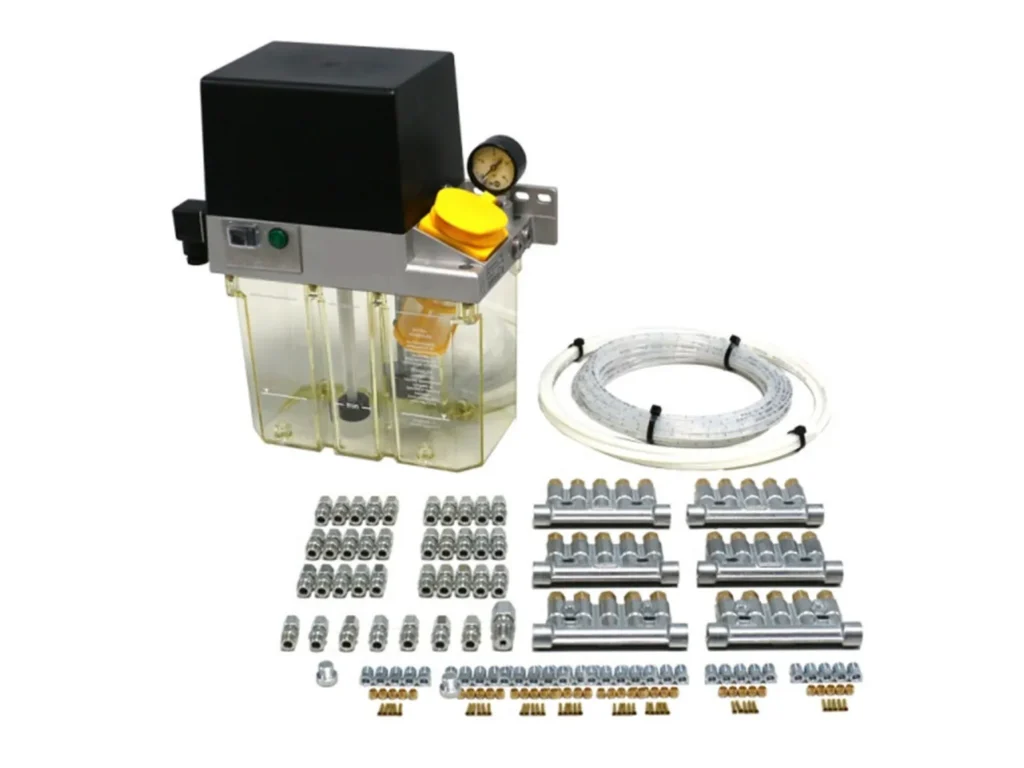
Beneath the heavy cast iron, the enclosed way covers, and the splash of coolant, there is a silent, invisible hero working tirelessly to keep the entire operation from tearing itself apart. That hero is the Central Lubrication System (CLS).
In the high-stakes world of CNC manufacturing, where unplanned downtime can cost thousands of dollars per hour and scrap parts can ruin profit margins, relying on manual lubrication is a relic of the past. Today, the Central Lubrication System (CLS) is the cardiovascular system of your CNC machine.
In this comprehensive guide, we will dive deep into the anatomy, types, benefits, and best practices of Central Lubrication Systems in CNC machines, exploring why they are absolutely non-negotiable for modern, high-precision manufacturing.
What is a Central Lubrication System?
At its core, a Central Lubrication System is an automated network designed to deliver precise, measured amounts of lubricant (oil or grease) to multiple friction points on a machine simultaneously or sequentially.
In a CNC machine, the moving parts such as linear guideways, ballscrews, spindle bearings, and gearbox components are subjected to immense loads, high speeds, and constant vibration. Without adequate lubrication, metal-on-metal contact occurs, leading to rapid wear, catastrophic failure, and a loss of machining accuracy.
Historically, operators had to manually apply grease or oil to these points using a grease gun or oil can. This was not only labor-intensive but highly prone to human error. An operator might forget a point, over-lubricate another (causing heat buildup from fluid “churning”), or use the wrong type of lubricant.
A CLS eliminates human error. It consists of a central reservoir, a pump, a control unit, a network of tubing, and a series of metering devices or injectors. The system is programmed to deliver the exact right amount of lubricant, at the exact right time, to the exact right location, ensuring optimal machine health without operator intervention.
The Anatomy of a CNC Central Lubrication System
To understand the value of a CLS, it helps to understand its components. A typical system integrated into a CNC machine consists of the following elements:
1. The Reservoir and Pump Unit
This is the heart of the system. The reservoir holds the bulk supply of lubricant (either way oil, spindle oil, or grease). The pump, driven by an electric motor or pneumatic pressure, generates the force required to push the lubricant through the distribution lines. In modern CNCs, these pumps are often equipped with low-level sensors to alert the control panel before the reservoir runs dry.
2. The Control Unit (The Brain)
The control unit dictates the lubrication cycle. It tells the pump when to activate, how long to run, and how often to cycle. In a CNC environment, this controller is usually integrated directly with the machine’s main CNC controller (such as Fanuc, Siemens, or Heidenhain). This allows the lubrication cycle to be tied to machine activity for example, triggering a lube pulse only when the axes are in motion, rather than on a blind, continuous timer.
3. Distribution Network and Injectors
From the pump, the lubricant travels through a network of high-pressure nylon or steel lines. These lines feed into metering devices.
- Injectors/Valves: These devices divide the main flow of lubricant into precise, measured volumes, ensuring that a massive column guideway receives more oil than a small Z-axis ballscrew, for instance.
- Progressive Dividers: In grease systems, these mechanical valves ensure that lubricant is distributed in a strict sequence. If one line is blocked, the entire sequence stops, immediately triggering an alarm.
4. Feedback Sensors and Monitoring
Modern CLS units are equipped with pressure switches and cycle-monitoring sensors. If the pump runs but the pressure doesn’t build (indicating a massive leak), or if the pressure builds instantly (indicating a blocked line), the system will halt the machine and throw an alarm on the operator’s screen, preventing dry-running damage.
Why CNC Machines Need Centralized Lubrication
You might wonder why a CNC machine can’t just rely on a simple, manual greasing schedule. The answer lies in the extreme physical demands placed on modern CNC equipment.
1. The Battle Against Thermal Distortion
In precision machining, microns matter. Friction generates heat. When a linear guideway or ballscrew generates heat due to inadequate lubrication, the metal expands. This thermal growth alters the geometry of the machine, shifting the tool center point (TCP) and ruining part tolerances. A Central Lubrication System (CLS) provides a continuous, microscopic film of lubricant that minimizes friction, keeping the machine thermally stable and ensuring that the part you machine at 8:00 AM is identical to the part you machine at 4:00 PM.
2. High-Speed and High-Acceleration Demands
Modern CNC machines are incredibly fast. Rapid traverses often exceed 1,000 inches per minute, with accelerations that would throw a manually lubricated system out the window. The lubricant film on a guideway is subjected to extreme shear forces. A Central Lubrication System (CLS) ensures that the lubricant is constantly replenished at the leading edge of the bearing blocks, maintaining the hydrodynamic wedge that keeps the rollers floating above the raceway.
3. Contamination Prevention
CNC machines operate in harsh environments, surrounded by abrasive metal chips, cast iron dust, and highly alkaline water-based coolants. A properly pressurized Central Lubrication System (CLS) creates a positive seal at the lubrication points. This slight outward pressure of fresh oil/grease prevents coolant and microscopic chips from infiltrating the bearing seals and destroying the internal components of the linear guides.
4. Multi-Axis Complexity
A 5-axis CNC machine has dozens of lubrication points spread across complex, moving geometries. Manually reaching all these points safely while the machine is running is impossible, and doing it during setup wastes valuable production time. A CLS routes lubricant to the most hidden, hard-to-reach pivots and trunnions automatically.
Types of Central Lubrication Systems in CNC
Not all CNC machines are created equal, and neither are their lubrication systems. The choice of CLS depends on the machine’s size, speed, and the specific components being lubricated.
1. Single-Line Parallel Systems (Oil)
Commonly used for linear guideways and ballscrews, this system uses a single supply line that feeds multiple injectors. Each injector is set to dispense a specific volume of oil. When the pump activates, all injectors fire simultaneously (or in rapid, independent succession).
- Best for: Medium to high-speed CNC machining centers where precise, adjustable dosing of oil is required.
- Advantage: If one injector fails or a line is blocked, the others continue to receive lubricant, keeping the machine running while an alarm alerts maintenance.
2. Progressive Systems (Grease)
Progressive systems use a series of mechanically linked metering devices. The lubricant is forced through the system in a strict, sequential order.
- Best for: Heavy-duty CNC machines, gantry mills, and slow-moving axes where grease is preferred over oil due to its sealing properties and ability to stay in place.
- Advantage: Built-in monitoring. Because the system is sequential, a single blockage halts the entire progression, triggering a visual or electrical indicator. You know exactly which line is blocked.
3. Oil-Air Lubrication (Minimum Quantity Lubrication – MQL)
This is the gold standard for high-speed CNC spindles and ultra-high-speed linear guides. Instead of flooding the bearing with oil, the Central Lubrication System (CLS) mixes microscopic droplets of oil with compressed air, shooting an “oil mist” directly into the bearing cavity.
- Best for: Spindles running at 15,000+ RPM, and high-speed gantry systems.
- Advantage: Eliminates the “churning” effect. At high speeds, a bath of oil creates immense fluid friction and heat. Oil-air provides a microscopic boundary layer of lubrication without the fluid drag, drastically reducing operating temperatures and extending spindle life. It is also highly environmentally friendly.
4. Circulating Oil Systems
Used in massive CNC machines, heavy-duty gearboxes, or large hydrostatic bearing systems. Oil is pumped from a large reservoir, circulated through the components to lubricate and cool them, and then returned to the reservoir via a return line to be filtered and reused.
- Best for: Heavy cutting, large boring mills, and applications where heat dissipation via the lubricant is just as important as friction reduction.
The Business Case: ROI and Benefits of a CLS
Investing in a machine with a high-quality CLS or retrofitting an older machine with one is not just an engineering decision; it is a vital business strategy.
1. Drastic Reduction in Unplanned Downtime
A failed ballscrew or a scored linear guideway can take a CNC machine offline for days, requiring expensive parts and mechanical realignment. By ensuring constant, optimal lubrication, a CLS extends the life of these components from months to decades. The ROI of a CLS is quickly realized the first time it prevents a catastrophic axis failure.
2. Energy Efficiency
Friction is the enemy of efficiency. A poorly lubricated machine requires more torque from the servo motors to move the axes. This translates directly to higher electricity consumption. By maintaining a perfect fluid film, a CLS reduces the load on the drive motors, lowering the machine’s overall energy footprint a critical metric in modern, sustainability-focused manufacturing.
3. Reduced Scrap and Improved Quality
As mentioned earlier, friction causes heat, and heat causes thermal expansion. Thermal expansion leads to out-of-tolerance parts. By stabilizing the machine’s thermal growth, a CLS ensures that your CNC machine holds tight tolerances consistently, reducing scrap rates and the need for manual in-process adjustments.
4. Environmental and Safety Compliance
Manual lubrication often leads to over-greasing. Excess grease oozes out of the bearings, mixes with coolant, and creates a slippery, hazardous mess on the shop floor. It also clogs coolant filtration systems. A CLS meters the exact amount of lubricant needed, keeping the shop floor clean, reducing coolant contamination, and minimizing the disposal of hazardous, oil-soaked waste.
Industry 4.0: The Smart CLS and Predictive Maintenance
As we navigate the manufacturing landscape of 2026, the integration of the Industrial Internet of Things (IIoT) has transformed the humble lubrication system into a smart, data-generating asset.
Modern CLS units are no longer just dumb pumps; they are edge-computing nodes. They monitor pump cycles, pressure curves, and reservoir levels, feeding this data directly into the machine’s digital twin or the shop’s Manufacturing Execution System (MES).
Predictive Maintenance
Instead of waiting for a low-level alarm, smart CLS systems track the rate of lubricant consumption. If the system notices that the X-axis is consuming 15% more oil than it did last month, it indicates a potential seal degradation or an impending bearing failure. The system can automatically generate a work order for maintenance to inspect the axis during the next scheduled shift change, preventing an unexpected breakdown.
Integration with CNC Controllers
Advanced CLS systems communicate bi-directionally with the CNC controller. If the machine is executing a heavy, high-load roughing program, the CLS can temporarily increase the dosing volume to the guideways. When the machine switches to a light, high-speed finishing pass, the CLS reduces the dosing to prevent over-lubrication. This dynamic, load-based lubrication is the pinnacle of automated machine care.
Common Pitfalls and Maintenance Best Practices
Even the most advanced Central Lubrication System requires attention. A CLS is only as good as the maintenance program supporting it. Here are the most common pitfalls shop floors encounter, and how to avoid them:
1. The Danger of Over-Lubrication
More is not always better. Over-lubricating a ballscrew or linear guide causes the rolling elements to “churn” through the excess grease or oil. This churning generates massive amounts of heat, which can warp the machine components and blow out the bearing seals. Best Practice: Always calibrate injectors according to the machine tool builder’s exact specifications, not the operator’s “gut feeling.”
2. Mixing Lubricants
Never mix different types of grease or oil. Mixing a lithium-complex grease with a polyurea grease, for example, can cause the lubricant to break down into a liquid, completely destroying its load-bearing capabilities. Best Practice: Dedicate specific reservoirs and filling equipment to specific lubricants. Clearly label all lines and reservoirs.
3. Ignoring “Soft” Alarms
Operators often become desensitized to minor alarms. If a “Lube Low” or “Lube Pressure” warning flashes and the operator simply hits “reset” to keep the cycle running, they are playing Russian roulette with the machine’s axes. Best Practice: Implement a strict shop-floor policy where lubrication alarms require a mandatory maintenance inspection before the machine is cleared to run.
4. Neglecting the Filters
Lubricant degrades over time, picking up microscopic metal wear particles and moisture. If the CLS reservoir lacks a proper breathers or filtration system, this contaminated oil is pumped directly into the precision bearings. Best Practice: Change reservoir filters and desiccant breathers on a strict, calendar-based schedule, regardless of how clean the oil looks.
5. Using the Wrong Viscosity
CNC machines are engineered around specific fluid dynamics. Using a way oil that is too thick will not reach the far ends of the guideways during rapid traverses; using oil that is too thin will not maintain the hydrodynamic wedge under heavy cutting loads. Best Practice: Always use the exact ISO VG grade specified by the machine OEM.
How to Choose the Right CLS for Your Shop
If you are purchasing a new CNC machine, or looking to retrofit an older manual-lube machine, what should you look for in a Central Lubrication System?
- Controller Compatibility: Ensure the CLS can integrate seamlessly with your CNC brand (Fanuc, Siemens, Mitsubishi, Heidenhain). You want the lubrication cycles to be managed by the machine’s logic, not a standalone, disconnected timer.
- Monitoring Capabilities: Do not buy a system without pressure feedback and cycle verification. You need to know if the oil is actually reaching the components, not just leaving the pump.
- Reservoir Size and Accessibility: The reservoir should be large enough to allow for reasonable intervals between top-offs, but it must be easily accessible for the operator to check the level and fill it safely.
- Environmental Suitability: If your shop experiences extreme cold in the winter, ensure the pump and reservoir are equipped with heaters, or that the chosen lubricant has a suitable pour point. Conversely, for high-heat environments, ensure the system can handle high-viscosity oils without cavitating the pump.
Conclusion: The Silent Guardian of Your Bottom Line
In the relentless pursuit of tighter tolerances, faster cycle times, and higher profitability, it is easy to focus on the flashy aspects of CNC machining: the 5-axis kinematics, the advanced CAM software, and the exotic cutting tool geometries.
However, the foundation of all that precision rests on the humble Central Lubrication System. It is the silent guardian of your machine’s health, the protector of your profit margins, and the unsung hero of the modern shop floor.
By understanding how your CLS works, respecting its maintenance requirements, and leveraging the smart, IoT-driven monitoring capabilities available today, you can ensure that your CNC machines run cooler, last longer, and produce better parts.
Don’t wait for the screech of a dry bearing or the catastrophic failure of a ballscrew to pay attention to your lubrication system. Audit your current CLS setup, train your operators to respect the alarms, and treat your lubrication system with the same reverence you give your cutting tools. In the world of CNC machining, a well-lubricated machine is a profitable machine.


