
Walk up to any high-performance CNC machining center during a heavy milling operation, and you will witness a violent, beautiful chaos. The spindle screams at 10,000 RPM, a flood of high-pressure coolant rushes over the cutting zone, and a literal waterfall of sharp, hot metal chips cascades down into the machine bed.
While the spindle, the CNC controller, and the cutting tools get all the glory for creating the final part, there is a critical piece of equipment working tirelessly in the shadows to ensure the entire process doesn’t descend into a catastrophic, chip-jammed nightmare. That equipment is the Chip Conveyor.
Often dismissed as a mere “cleanup crew” or a basic accessory, the chip conveyor is actually a vital component of modern CNC infrastructure. In an era where unattended “lights-out” machining is the gold standard and micron-level precision is expected, the ability to efficiently evacuate metal swarf is non-negotiable.
In this comprehensive guide, we will explore the critical role of chip conveyors in CNC machining, break down the different types available, and reveal the hidden benefits they bring to your shop floor’s productivity, safety, and profitability.
The Problem with Chips : Why Evacuation is Critical
To understand the value of a chip conveyor, you first have to understand the enemy: the chip itself.
When a cutting tool shears metal away from a workpiece, it generates chips (also known as swarf). Depending on the material being cut and the toolpath being executed, these chips can take various forms. They can be long, stringy “birds nests,” brittle little needles, or fine, powdery dust. Regardless of their shape, chips possess three dangerous characteristics: they are incredibly hot, highly abrasive, and razor-sharp.
If chips are not removed from the machining zone immediately, several critical failures occur:
- Recutting and Tool Breakage: If chips pile up around the workpiece, the cutting tool will inevitably run over them again. This “recutting” dulls the cutting edges instantly, leading to catastrophic tool breakage and ruined surface finishes.
- Machine Collision and Damage: In a vertical machining center (VMC), chips can pile up so high on the work table that the spindle crashes into the mound of metal during a rapid tool change or a Z-axis plunge.
- Coolant Contamination: Chips left sitting in the coolant sump break down into fine particulates. These fines circulate through the coolant pump, acting like liquid sandpaper that destroys pump seals, clogs nozzles, and degrades the quality of the coolant.
- Thermal Distortion: Metal chips retain a massive amount of heat from the cutting process. If left inside the machine enclosure, they transfer that heat to the machine castings and the coolant, causing thermal growth that ruins part tolerances.
A chip conveyor solves all these problems by continuously and automatically removing the swarf from the machine bed and depositing it into an external collection bin.
Types of Chip Conveyors in CNC Machining
Not all chips are created equal, and therefore, not all chip conveyors are built the same. Choosing the right conveyor depends heavily on the “morphology” (shape and size) of the chips your specific machining process generates.
Here are the four primary types of chip conveyors used in CNC environments:
1. Hinge Belt Conveyors
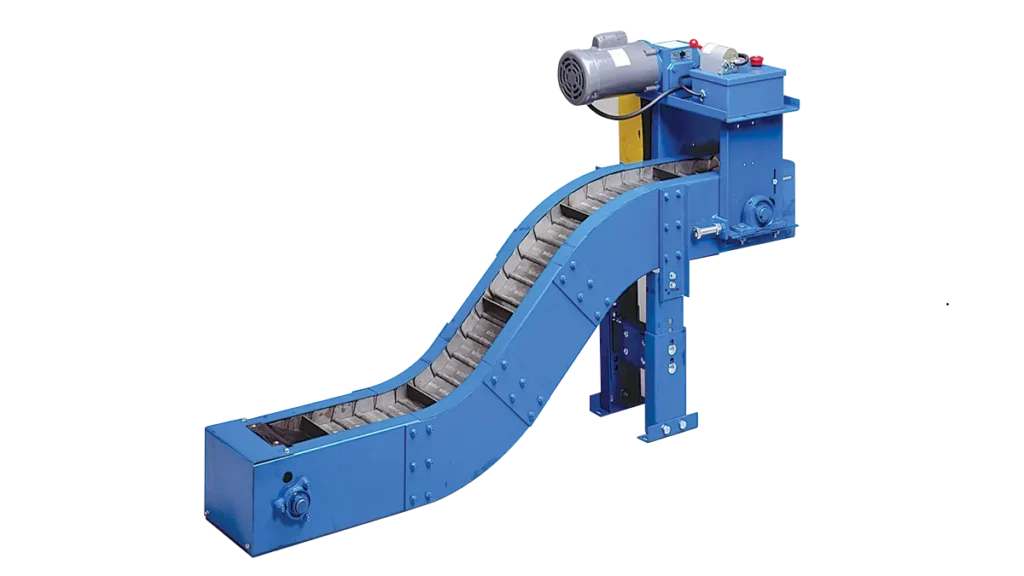
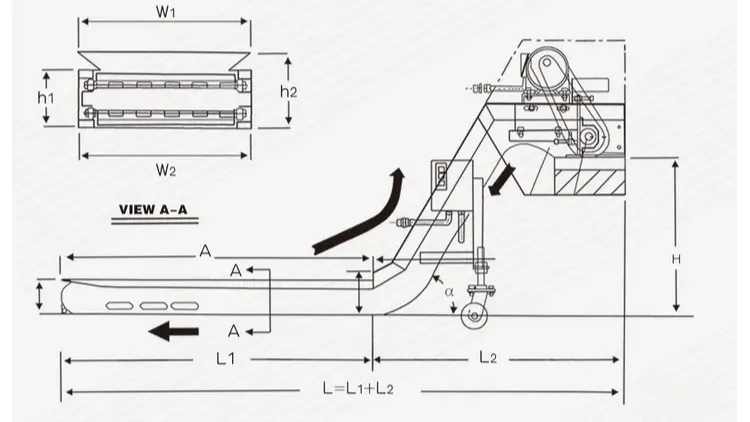
The hinge belt conveyor is the undisputed workhorse of the CNC world. It consists of a continuous belt made of overlapping, hinged steel plates (similar to a tank track) that ride on sprockets.
- Best For: Long, stringy, tangled chips (like those generated from milling steel or stainless steel) and heavy, bulky chunks of swarf.
- How it Works: The overlapping steel plates create a solid, continuous surface that prevents stringy chips from tangling in the mechanism. The belt scoops the chips from the bottom of the machine sump and carries them up an incline to discharge them into a bin.
- Pros: Extremely durable, handles heavy loads, excellent for stringy materials.
- Cons: Can be noisy, requires more physical space due to the incline, and the hinges can wear out over time if fine abrasives get trapped inside them.
2. Scraper (Drag) Conveyors
Scraper conveyors use a chain-driven system with paddles or scrapers that drag along the bottom of a trough to push chips upward and out of the machine.
- Best For: Fine, powdery, or sticky chips. They are the go-to choice for machining aluminum, brass, or magnesium, where chips tend to be small, pasty, or easily compacted.
- How it Works: As the chain pulls the scrapers along the trough floor, it physically drags the fine chips up an inclined ramp.
- Pros: Excellent for fine materials that would slip through or jam a hinge belt. Compact design.
- Cons: High friction means higher motor loads. Not ideal for heavy, sharp steel chips, which can jam the paddles or cause excessive wear on the trough floor.
3. Magnetic Conveyors
Magnetic conveyors are a brilliant, low-maintenance solution for specific materials. Instead of a mechanical belt or scraper, they use a series of powerful permanent magnets or electromagnets housed inside a stationary, stainless-steel housing.
- Best For: Fine, non-abrasive, magnetic chips. They are the absolute gold standard for machining cast iron, powdered metals, and certain carbon steels.
- How it Works: The magnetic field penetrates the stationary stainless-steel sheet. As the magnetic field rotates internally, it grabs the ferrous chips from the coolant and pulls them along the outside of the housing, eventually dropping them off the end into a bin.
- Pros: Virtually no moving parts in the fluid zone, meaning almost zero mechanical wear. Extremely low maintenance. Excellent at separating fine iron particles from the coolant.
- Cons: Completely useless for non-magnetic materials like aluminum, titanium, or austenitic stainless steels (like 304 or 316).
4. Auger (Screw) Conveyors
Auger conveyors utilize a large, rotating helical screw (like a giant meat grinder) enclosed in a tube or trough to move chips.
- Best For: Brittle, broken chips (like those from machining gray cast iron or certain brasses) and applications where floor space is highly restricted.
- How it Works: The rotating screw catches the chips and physically pushes them along the trough and up an incline to the discharge point.
- Pros: Very compact footprint, can be routed around tight corners using flexible housings, excellent for dry machining or minimum quantity lubrication (MQL) setups.
- Cons: Terrible for stringy chips, which will instantly wrap around the screw and jam the motor. High wear on the screw flights if machining highly abrasive materials.
The Hidden Benefits: Beyond Just Moving Chips
While the primary job of a chip conveyor is to move metal out of the machine, its secondary benefits are what truly justify the investment. A well-designed chip conveyor system is a cornerstone of a highly efficient, profitable shop.
1. Enabling “Lights-Out” Unattended Machining
The ultimate goal of modern manufacturing is unattended machining running a CNC machine overnight or over the weekend without an operator present. You cannot achieve this if the machine’s internal chip bin fills up after 45 minutes and triggers an alarm, halting the cycle. A high-capacity chip conveyor continuously evacuates swarf directly into a large external cart, allowing the machine to run for 24 hours or more uninterrupted. This maximizes spindle utilization and drastically lowers the cost-per-part.
2. Extending Coolant Life and Performance
Coolant is one of the highest consumable costs in a machine shop. When fine chip particulates are allowed to settle in the sump, they circulate through the system. This “fines” contamination acts as a lapping compound, destroying the precision internals of your high-pressure coolant pumps. Furthermore, fine chips provide a massive surface area for tramp oil and bacteria to cling to, causing the coolant to go rancid and smell. By efficiently removing chips (and the fines suspended in them) from the sump, a chip conveyor keeps the coolant clean, extending its life from weeks to years.
3. Maintaining Thermal Stability
As mentioned earlier, chips are hot. In high-precision machining, even a 2-degree Celsius change in the machine’s temperature can cause thermal growth that pushes parts out of tolerance. By continuously removing the hot chips from the machining zone and the coolant sump, the conveyor acts as a heat-exchange mechanism, carrying the thermal energy out of the machine. This helps maintain a stable, ambient temperature inside the machine enclosure, ensuring consistent part accuracy.
4. Improving Shop Floor Safety and Ergonomics
Before automated conveyors, operators had to use hooks, shovels, and brooms to manually clear chips from the machine bed. This is a recipe for severe lacerations, puncture wounds, and ergonomic injuries. Furthermore, chips and coolant tracked onto the floor create severe slip-and-fall hazards. A chip conveyor automates this dangerous task, keeping the operator’s hands away from sharp swarf and keeping the shop floor clean, dry, and safe.
Choosing the Right Conveyor and Maintenance Best Practices
Selecting the right chip conveyor requires a thorough analysis of your shop’s specific needs. Ask yourself: What materials am I cutting? What is the shape of the chips? How much volume am I generating per hour? What is my available floor space? If you are cutting long, stringy stainless steel, a magnetic conveyor will do nothing for you. If you are machining fine aluminum, a hinge belt might let the chips slip through the gaps. Match the conveyor to the chip morphology.
Once installed, maintenance is key to longevity. Even the best conveyors fail if neglected.
- Keep it Clean: Regularly flush the conveyor trough to prevent the buildup of compacted, concrete-like chip sludge at the bottom of the sump.
- Check Tension and Wear: For hinge belts and scrapers, regularly inspect the chain tension and the wear on the sprockets. A loose chain can jump a sprocket, causing catastrophic mechanical damage.
- Monitor the Motor: Pay attention to the conveyor motor’s amperage draw. A sudden spike in amperage is the first indicator of a jam or a seized bearing. Many modern conveyors integrate with the CNC controller to trigger an alarm if the motor overloads, saving the system from burning out.
- Beware of Tramp Metal: While conveyors are tough, they are not invincible. A dropped carbide insert, a broken tap, or a heavy chunk of forged steel can jam the mechanism. Ensure your machines have chip baskets or tramp metal screens installed at the sump drop-offs to catch large objects before they enter the conveyor.
Conclusion: Respect the Cleanup Crew
It is easy to become mesmerized by the cutting-edge technology of a CNC machine: the linear motors, the probing systems, the AI-driven collision avoidance. But all of that high-tech precision is entirely useless if the machine is choked by its own waste.
The chip conveyor is the unsung hero of the CNC shop floor. It is the tireless janitor, the thermal regulator, the coolant protector, and the key to unlocking unattended manufacturing. By understanding the different types of conveyors, selecting the right one for your specific chip morphology, and maintaining it properly, you ensure that your CNC machines spend their time cutting metal, not drowning in it.
Don’t treat your chip conveyor as an afterthought. Invest in a high-quality evacuation system, keep it well-maintained, and watch your machine’s uptime, coolant life, and overall profitability soar. In the world of CNC machining, a clean machine is a highly profitable machine.


