
Your CNC milling machine is only as good as its spindle. Without it, you’re just moving a heavy block of metal around under a stationary quill. I learned this the hard way early in my career as a VMC operator. I was running a batch of tight-tolerance aluminum aerospace housings and ignored a faint, high-pitched whine coming from the spindle during a long face-milling operation. Two hours later, a failing bearing seized, ruined the part, snapped a $150 carbide end mill, and cost the shop hours of downtime.
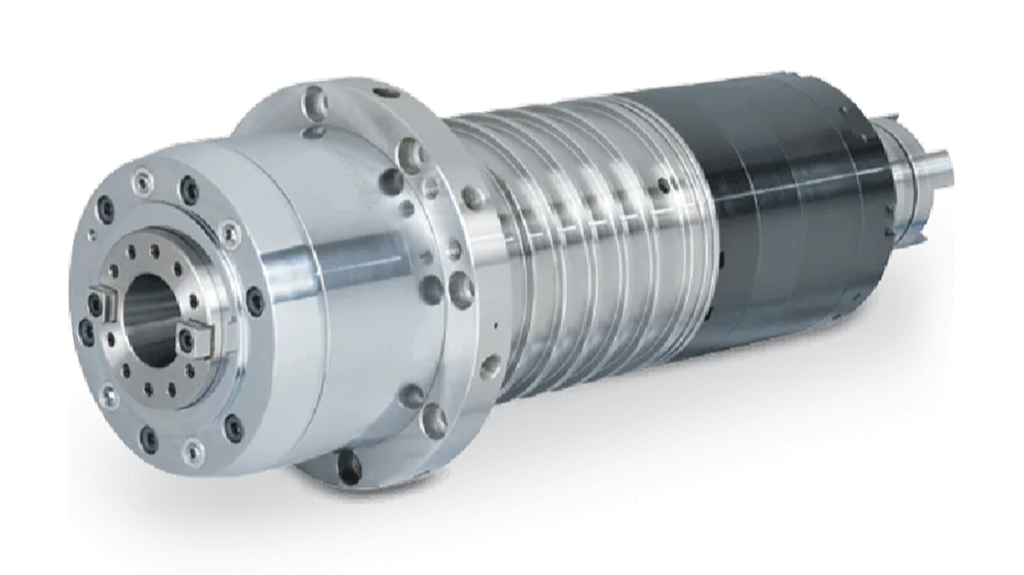
A CNC milling spindle is the rotating component that holds and drives your cutting tools (end mills, face mills, drills). It provides the rotational force (RPM) and torque needed for material removal. Precision bearings allow high-speed rotation while maintaining tool position accuracy, directly dictating the quality of the milled parts you produce.
Every CNC milling operator I know starts by learning the controller, G-code, and how to fixture parts. But it didn’t take long for me to realize that the real heartbeat of the machining center is the spindle. Once I understood how it works and how to protect it, my parts got better, my end mill life doubled, and my shifts became a lot less stressful.
What is a Spindle on a CNC Mill and How Does It Work?
Spindle failure stops production dead. I recall losing a whole day of runtime when one overheated during a rush order of steel brackets. Never again.
The milling spindle assembly houses a motor-driven shaft that rotates your cutting tools. Power is transferred via belts, gears, or direct drive, while precision bearings minimize vibration. Your milling tool holder attaches via standardized tapers (like CAT40, BT40, or HSK), and a hydraulic or mechanical drawbar pulls the retention knob (pull stud) up tight, ensuring secure, accurate mounting during the cut.
Core Components You Should Know
- Motor/Drive System: Generates the rotation. Can be belt-driven, gear-driven, or direct-drive.
- Bearing System: Usually angular contact bearings. They handle both the heavy radial (side-to-side) forces of slotting and the axial (up-and-down) forces of drilling or plunging.
- Drawbar & Taper: The mechanical “handshake” that locks your tool holder into the spindle nose.
- Cooling System: Internal air or liquid coolant that prevents the spindle housing from expanding and losing Z-axis tolerance during long milling cycles.
The Operator’s Workflow
Power transfers from the drive to the tool holder. Coolant flows to prevent overheating. Encoders monitor real-time RPM, automatically adjusting to maintain set speeds under heavy cutting loads. As an operator, your job is to ensure this system stays clean, lubricated, and properly warmed up so it can maintain precision during 10+ hour milling cycles.
What is the Purpose of a CNC Milling Spindle?
I once tried to push a light-duty, high-speed spindle to do heavy roughing in 4140 steel with a large indexable face mill. The chatter marks looked like a beaver chewed the part, and the tool shattered. Proper spindle application prevents this.
The spindle’s core purpose is converting raw power into controlled, precise tool rotation. It positions milling cutters accurately, applies cutting forces consistently, and maintains programmed speeds under load. This directly impacts part quality, tool life, and your ability to hit tight tolerances.
Critical Functions on the Mill Floor
- Speed Control: Maintains consistent RPM even when an end mill engages and disengages variable material hardness.
- Torque Delivery: Provides the twisting power needed to prevent the spindle from stalling during heavy roughing or large-diameter face milling.
- Tool Positioning: Holds the tool holder within 0.0001″ to 0.0003″ runout tolerance for fine finishing passes.
- Vibration Management: Absorbs cutting forces through rigid construction, preventing chatter during thin-wall milling.
What are the Types of Milling Spindles You’ll Encounter?
Choosing the wrong speeds and feeds for a spindle can slow you down, waste tools, and ruin parts. That’s why I always match my milling strategy to the spindle type I’m running.
The main types of CNC milling spindles include belt-driven, gear-driven, direct-drive, and motorized spindles. Each offers different advantages depending on the torque, speed, and precision needs of your current job.
| Spindle Type | What It Feels/Sounds Like | Best Milling Applications | Operator Tip |
|---|---|---|---|
| Belt-Driven | Slight hum; may whine at max RPM. | General-purpose VMC milling, job shops. | If surface finish suddenly degrades under heavy load, check for belt wear or slippage. |
| Gear-Driven | Audible gear whir; feels incredibly rigid. | Heavy roughing, large face mills, hogging out steel or cast iron. | Don’t rush the RPM. Let the gears do the work. Watch gearbox temperature on long roughing cycles. |
| Direct-Drive | Whisper-quiet; instant acceleration. | High-speed aluminum milling, micro-milling, fine finishing. | Keep tool holders impeccably clean. Any runout is highly noticeable and amplified at high speeds. |
| Motorized (Built-in) | Smooth, consistent hum; compact housing. | High-speed machining centers, 5-axis milling heads, tight spaces. | Monitor coolant flow closely. These rely heavily on liquid cooling to prevent thermal growth during long cycles. |
How Do Spindles Affect Milling Accuracy and Surface Finish?
A 0.001″ spindle deflection once ruined 300 medical implant housings I was finishing. Now, I monitor spindle health religiously.
Spindle condition directly determines part quality. Runout causes dimensional errors and uneven end mill wear. Vibration creates surface waves (chatter) on finished walls. Thermal growth shifts the Z-axis tool position. A balanced, well-maintained spindle produces mirror finishes and holds micron-level tolerances.
Critical Relationships for Milling Operators
| Spindle Factor | Accuracy Effect | Surface Impact |
|---|---|---|
| Runout | Hole size errors, uneven flute wear | Visible tool marks, poor finish on walls |
| Vibration | Feature drift, out-of-tolerance dims | Chatter marks, “ghosting” on milled surfaces |
| Thermal Growth | Z-axis position shift over time | Inconsistent pocket depths, tight/loose fits |
| Bearing Wear | Reduced rigidity, tool pull-out | Rough patches, unpredictable end mill life |
The CNC Milling Operator’s Spindle Survival Checklist
You don’t need to be a maintenance technician to protect the spindle. As the person running the mill, you are its first line of defense.
Daily Habits
- Run the Warm-Up: Every single morning, run the 10–15 minute spindle warm-up program. This circulates oil and gradually expands the bearings to operating temperature, preventing thermal shock when you start cutting.
- Wipe the Taper: Before every tool change, wipe the spindle taper and the tool holder shank with a clean, lint-free cloth. A single microscopic aluminum chip trapped in the taper can cause massive runout and ruin a part.
- Listen: Know what your mill sounds like when it’s happy. A new high-pitched squeal or grinding noise during a face mill pass is your first warning sign.
Weekly/Monthly Habits
- Check Lubrication: Verify spindle lubrication levels (if your machine has a manual or semi-auto system).
- Clean Coolant Nozzles: Clear any chips or debris from the coolant nozzles aimed at the spindle nose and tool to prevent buildup and ensure proper cooling.
- Inspect Tool Holders: Look for fretting, rust, or damage on the shank of your CAT/BT/HSK tool holders. A damaged holder will damage the spindle interior over time.
Red Flags: When to Call Maintenance
Empower yourself to speak up. Don’t wait for a catastrophic crash. Stop the machine and call your supervisor or maintenance if you notice:
- Unusual Vibrations: Chatter that wasn’t there yesterday, even with a fresh, balanced end mill and solid fixturing.
- Abnormal Noises: A high-pitched squeal, grinding, or a “growling” sound from the spindle nose, especially under load.
- Excessive Heat: The spindle housing is unusually hot to the touch near the nose after a standard cycle.
- Inconsistent Z-Heights: Parts are suddenly out of tolerance in the Z-axis (e.g., pockets are too shallow or too deep), which can indicate drawbar wear or tool pull-out.
Conclusion
The CNC milling spindle drives speed, power, and precision. Its quality and condition directly shape your results. As a CNC milling operator, you know the sound, feel, and rhythm of your machine better than anyone else. Respect the spindle, keep the tapers clean, warm it up properly, and speak up when something feels off. Treat the spindle right, and it will give you good parts, long tool life, and a stress-free shift.
Have a spindle survival tip or a story about a near-miss on the mill? Share it in the comments below. Let’s help each other run better parts.


