
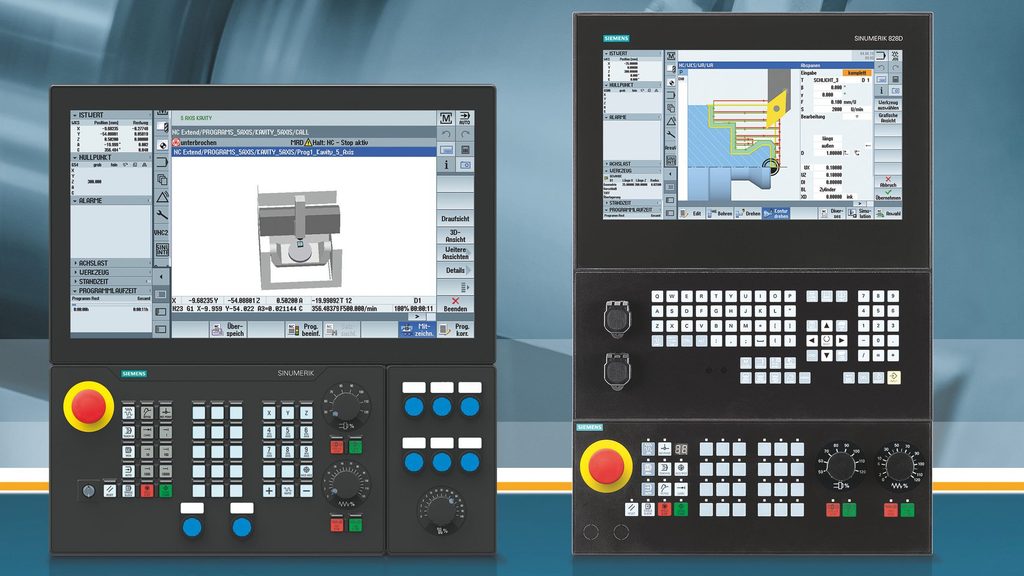
In the highly competitive and rapidly evolving landscape of global manufacturing, the difference between success and obsolescence often comes down to precision, efficiency, and adaptability. At the heart of this industrial revolution is Computer Numerical Control (CNC) technology, and standing at the absolute pinnacle of this field is SINUMERIK. Developed by the German engineering titan Siemens, SINUMERIK is not merely a brand of CNC automation systems; it is the definitive standard for automating, controlling, and networking machine tools. From complex multi-axis milling and turning centers to high-precision grinding machines, SINUMERIK serves as the central nervous system of modern precision manufacturing, driving the capabilities of Industry 4.0 and the digital enterprise.
To understand the magnitude of SINUMERIK, one must look beyond the physical hardware of the machine tool. A CNC controller is only as effective as the ecosystem it inhabits. Siemens has meticulously designed SINUMERIK to integrate seamlessly into its Totally Integrated Automation (TIA) portal. This convergence of Information Technology (IT) and Operational Technology (OT) means that SINUMERIK does not operate in a silo. Instead, it communicates fluidly with higher-level Enterprise Resource Planning (ERP) systems, Manufacturing Execution Systems (MES), and the shop-floor sensor network. This holistic approach ensures that data flows unimpeded from the boardroom to the cutting tool, enabling real-time decision-making, predictive maintenance, and unprecedented levels of production transparency.
Key Technological Features: Redefining Machining Capabilities
The supremacy of SINUMERIK in the global market is built upon a foundation of relentless innovation. The system’s technological features are designed to solve the most complex challenges in modern machining, bridging the gap between theoretical design and physical reality.
1. Flexible Programming:
One of the most significant bottlenecks in manufacturing is the time lost between the design phase and the actual cutting of metal. SINUMERIK addresses this through a highly flexible, dual-layered programming philosophy. At its core, the system fully supports standard ISO programming and G-code, ensuring compatibility with decades of legacy code and the vast ecosystem of third-party CAM (Computer-Aided Manufacturing) software. This is critical for complex, pre-programmed parts where offline CAM generation is the most efficient route.
However, SINUMERIK’s true genius lies in its shop-floor conversational programming capabilities, primarily driven by the ShopMill and ShopTurn software cycles. These interfaces allow machine operators to program standard and complex geometries directly at the machine tool using a graphical, intuitive user interface (SINUMERIK Operate). Instead of writing lines of dense G-code, operators can input parameters such as diameters, depths, and contour coordinates into structured dialog boxes. This dramatically reduces setup times, minimizes the risk of coding errors, and empowers skilled machinists to make on-the-fly adjustments without needing to return to the CAM office. By bridging the gap between the programmer and the operator, SINUMERIK ensures maximum machine utilization and agility.
2. Complex Multi-Axis Machining: Mastering Kinematics
As industries like aerospace, medical, and energy demand increasingly complex geometries, the reliance on 3-axis machines has given way to 4- and 5-axis simultaneous machining. Controlling multiple rotary and linear axes simultaneously requires immense computational power to manage kinematic transformations, rotary tool center point (TCP) management, and singularity avoidance.
SINUMERIK excels in this domain through advanced, high-speed algorithms and sophisticated look-ahead functions. The controller can analyze thousands of program blocks in advance, calculating the optimal speed, acceleration, and jerk limits to maintain a consistent chip thickness and flawless surface finish. Features like spline interpolation (NURBS and B-splines) allow the machine to glide over free-form surfaces smoothly, rather than stopping and starting at the end of every linear block. Furthermore, integrated collision avoidance systems continuously monitor the machine’s kinematics in real-time, protecting the spindle, the tool, and the workpiece from catastrophic crashes during complex 5-axis mold-making or structural aerospace component machining.
3. Digital Twin Capability: The Virtual Paradigm
The concept of the “Digital Twin” has transitioned from a buzzword to a mandatory requirement for advanced manufacturing. SINUMERIK is at the forefront of this shift, allowing manufacturers to create a 1:1 virtual replica of the physical machine tool. Using virtual simulation software conceptually aligned with industry benchmarks like Run MyVirtual Machine and natively supported by Siemens’ own Create MyVirtual Machine engineers can simulate the entire machining process in a 3D environment before a single piece of metal is cut.
This virtual commissioning process is transformative. It allows programmers to verify NC code, detect potential collisions, and optimize cycle times in a risk-free digital space. By validating the machine’s behavior virtually, manufacturers can drastically reduce the physical commissioning time on the shop floor, accelerate time-to-market, and prevent the costly scrap and machine damage associated with untested programs. Furthermore, the digital twin lives on throughout the machine’s lifecycle, serving as a training tool for operators and a testing ground for process optimizations without interrupting actual production.
4. Multitasking and Hybrid Manufacturing:
The modern manufacturing philosophy dictates that a part should be completed in a single setup to eliminate cumulative tolerances and reduce handling time. SINUMERIK’s architecture is inherently multitasking, capable of orchestrating a symphony of different machining technologies on a single machine platform.
A single SINUMERIK controller can seamlessly manage mill-turn operations, combining the high-torque capabilities of a turning center with the high-speed precision of a milling spindle. Beyond traditional subtractive manufacturing, SINUMERIK supports hybrid manufacturing processes. It can control laser metal deposition (LMD) for additive manufacturing, allowing for the building up of complex features or the repair of high-value components, followed immediately by subtractive milling to achieve tight tolerances. It also integrates seamlessly with in-process measuring probes, automated part loading, and robotic interfaces, creating a fully autonomous, lights-out manufacturing cell.
The Product Lineup: Scalable Solutions for Every Need
Siemens understands that the manufacturing sector is not monolithic. A high-mix, low-volume aerospace job shop has vastly different requirements than a high-volume automotive transfer line. To address this, the SINUMERIK portfolio is meticulously scaled, offering tailored solutions that range from entry-level standard machines to highly complex, custom-built manufacturing plants.
1. SINUMERIK ONE: The Digital Native
Release Date: Introduced in 2019; achieved widespread market maturity and continuous software iteration .
SINUMERIK ONE does not merely represent an iterative hardware upgrade; it signifies an ontological shift in CNC architecture. It is the first CNC system designed natively around the concept of the “Digital Twin.” For the modern machinist, understanding SINUMERIK ONE is understanding the future of manufacturing.
Main Features:
- Native Digital Twin: SINUMERIK ONE allows for the creation of an exact virtual replica of the physical machine using createMyVirtualMachine. This enables virtual commissioning, collision detection, and program optimization in a simulated environment before any physical metal is cut.
- IT/OT Convergence: It seamlessly bridges Information Technology (IT) and Operational Technology (OT). The controller natively interfaces with edge computing, cloud analytics, and Manufacturing Execution Systems (MES), transforming the machine from an isolated tool into a node on the Industrial Internet of Things (IIoT).
- Unified Hardware/Software Ecosystem: By virtualizing the PLC (Programmable Logic Controller) and the NC (Numerical Control) kernels, SINUMERIK ONE drastically reduces the physical hardware footprint while exponentially increasing computational flexibility.
- Performance Optimization: It features enhanced look-ahead functions and ultra-fast processing speeds, allowing for the machining of complex, continuous 3D surfaces with unprecedented surface finish quality.
2. SINUMERIK 840D sl: The Premium Industry Standard
Release Date: Announced in 2009; widely deployed by 2010.
For over a decade, the SINUMERIK 840D sl served as the apex of traditional, hardware-centric CNC architecture. If you are entering a shop that manufactures complex components, you will likely encounter this system.
Main Features:
- Kinematic Interpolation: The 840D sl excels in managing complex multi-axis topologies, seamlessly coordinating up to 31 axes and 10 channels simultaneously.
- Safety Integrated: It pioneered the integration of safety functions directly into the drive system, allowing for safe speed monitoring and safe stop functions without the need for external hardware relays.
- Advanced HMI: Utilizing the SINUMERIK Operate interface, it provides a highly graphical, intuitive environment for shop floor programming, significantly reducing the cognitive load on the operator.
- Legacy Status: While newer architectures have emerged, the 840D sl remains a heavily installed baseline in global manufacturing, revered for its uncompromising precision and robust modularity.
3. SINUMERIK 828D: The Mid-Range Champion
Release Date: 2012.
Positioned as a bridge between entry-level simplicity and high-end complexity, the 828D was engineered for advanced turning and milling centers. It was designed to bring sophisticated cycle programming to mid-tier machine tools.
Main Features:
- Compact Hardware Architecture: Unlike the modular, cabinet-heavy 840D sl, the 828D utilizes a highly integrated, compact control panel, optimizing physical footprint on the machine.
- ShopTurn and ShopMill: These conversational programming interfaces allow operators to generate complex toolpaths graphically, bypassing the need for extensive manual G-code drafting.
- Precision Cycles: It introduced advanced turning and milling cycles that automated complex operations like thread cutting and contour milling, making it a staple in job-shop environments.
- Current Status: As the industry shifts toward unified digital ecosystems, the 828D is increasingly viewed as a legacy platform, though it remains highly prevalent in small-to-medium enterprise (SME) manufacturing.
4. SINUMERIK 808D Advanced: The Entry-Level Gateway
Release Date: 2012.
Positioned as a bridge between entry-level simplicity and high-end complexity, the 828D was engineered for advanced turning and milling centers. It was designed to bring sophisticated cycle programming to mid-tier machine tools.
Main Features:
- Compact Hardware Architecture: Unlike the modular, cabinet-heavy 840D sl, the 828D utilizes a highly integrated, compact control panel, optimizing physical footprint on the machine.
- ShopTurn and ShopMill: These conversational programming interfaces allow operators to generate complex toolpaths graphically, bypassing the need for extensive manual G-code drafting.
- Precision Cycles: It introduced advanced turning and milling cycles that automated complex operations like thread cutting and contour milling, making it a staple in job-shop environments.
- Current Status: As the industry shifts toward unified digital ecosystems, the 828D is increasingly viewed as a legacy platform, though it remains highly prevalent in small-to-medium enterprise (SME) manufacturing.
Selection Summary:
| Product | Range | Typical Machine Type |
|---|---|---|
| SINUMERIK 808D | Entry-level | 2-axis lathe, small 3-axis milling machine (simple production) |
| SINUMERIK 828D | Mid-range | CNC lathe, standard 3/4-axis machining center |
| SINUMERIK 840D sl | High-end | 5-axis simultaneous machining center, multitasking machine, complex grinding machine |
| SINUMERIK ONE | High-end (New) | Connected machines, 5-axis machining, IT integration, digital twin |
Note: Older generations such as the SINUMERIK 802D sl or 810D are no longer sold new, but remain very prevalent in the used market and for maintenance purposes.
Synthesizing the Evolution
For a novice entering the machining profession, the progression of the SINUMERIK lineup illustrates a broader narrative in manufacturing: the transition from isolated mechanical execution to integrated digital validation.
When you stand before a machine tool, recognize that the controller is not merely a keypad for inputting coordinates. Whether you are operating the legacy reliability of an 840D sl, the accessible efficiency of an 808D Advanced, or the digitally integrated environment of a SINUMERIK ONE, you are interacting with a sophisticated computational engine.
Mastering the SINUMERIK ecosystem requires more than memorizing G-codes; it demands an understanding of how digital logic governs physical kinematics. Embrace the technical depth of these systems, and you will transition from a mere machine operator to a true manufacturing technologist.
Industry Applications: Driving Global Sectors
The versatility of the SINUMERIK ecosystem makes it indispensable across a wide array of critical industries.
In the aerospace sector, where materials like titanium and Inconel are notoriously difficult to machine, SINUMERIK’s advanced vibration damping and adaptive control features ensure tool life is maximized and surface integrity is maintained. Its 5-axis capabilities are crucial for machining complex structural components and turbine blades.
In the automotive industry, where high volume and zero-defect manufacturing are paramount, the robustness and high-speed processing of the 840D sl and SINUMERIK ONE ensure that transfer lines and high-speed machining centers operate with minimal downtime and maximum throughput.
In the medical device sector, the demand for micro-machining and the processing of biocompatible materials requires extreme precision. SINUMERIK’s nano-level interpolation and temperature compensation algorithms allow for the production of intricate orthopedic implants and surgical instruments with life-saving accuracy.
In mold and die making, where surface finish is critical to reduce manual polishing time, SINUMERIK’s advanced look-ahead and spline interpolation ensure that free-form surfaces are machined smoothly, resulting in mirror-like finishes directly off the machine.
The Future of SINUMERIK: AI, IoT, and Sustainability
As manufacturing looks toward the future, SINUMERIK is evolving to meet the demands of the next industrial era. The integration of Artificial Intelligence (AI) and machine learning into the CNC controller is opening new frontiers. Adaptive control systems can now learn from cutting forces and acoustic emissions in real-time, automatically adjusting feed rates to prevent tool breakage and optimize cycle times without human intervention.
Furthermore, SINUMERIK is deeply integrated with Industrial Internet of Things (IIoT) platforms, such as Siemens Insights Hub (formerly MindSphere). This allows for the continuous monitoring of machine health, enabling predictive maintenance algorithms that can forecast component failures before they occur, thereby eliminating unplanned downtime.
Finally, as global manufacturing faces increasing pressure to reduce its carbon footprint, SINUMERIK offers advanced energy management features. Controllers can monitor and optimize the energy consumption of drives, hydraulics, and cooling systems, providing detailed analytics that help factories reduce their energy usage and move toward sustainable, green manufacturing.
Conclusion
SINUMERIK is much more than a collection of hardware and software. It is the culmination of decades of German engineering excellence and a deep understanding of the manufacturing process. By offering a scalable product lineup from the entry-level 808D Advanced to the digital-native SINUMERIK ONE Siemens ensures that manufacturers of all sizes can access world-class automation. With its unparalleled capabilities in flexible programming, complex multi-axis machining, digital twin simulation, and multitasking, SINUMERIK remains the undisputed brain of modern precision manufacturing, empowering industries to build the future with absolute confidence and precision.


