

This article is a deep dive into Rotation Tool Center Point (RTCP) the technology that separates “basic 5-axis positioning” from “true 5-axis simultaneous mastery.”We will explore the logic behind it, the specific syntax for Fanuc, Heidenhain, and Sinumerik, and provide a side-by-side NC program for a tilted 45° chamfer on a circular boss. The 5-Axis… Continue reading Rotation tool center point (RTCP) for 5-axis machining
Tag: #AdvancedCNC
Troubleshooting G-Code Errors in 5-Axis Milling
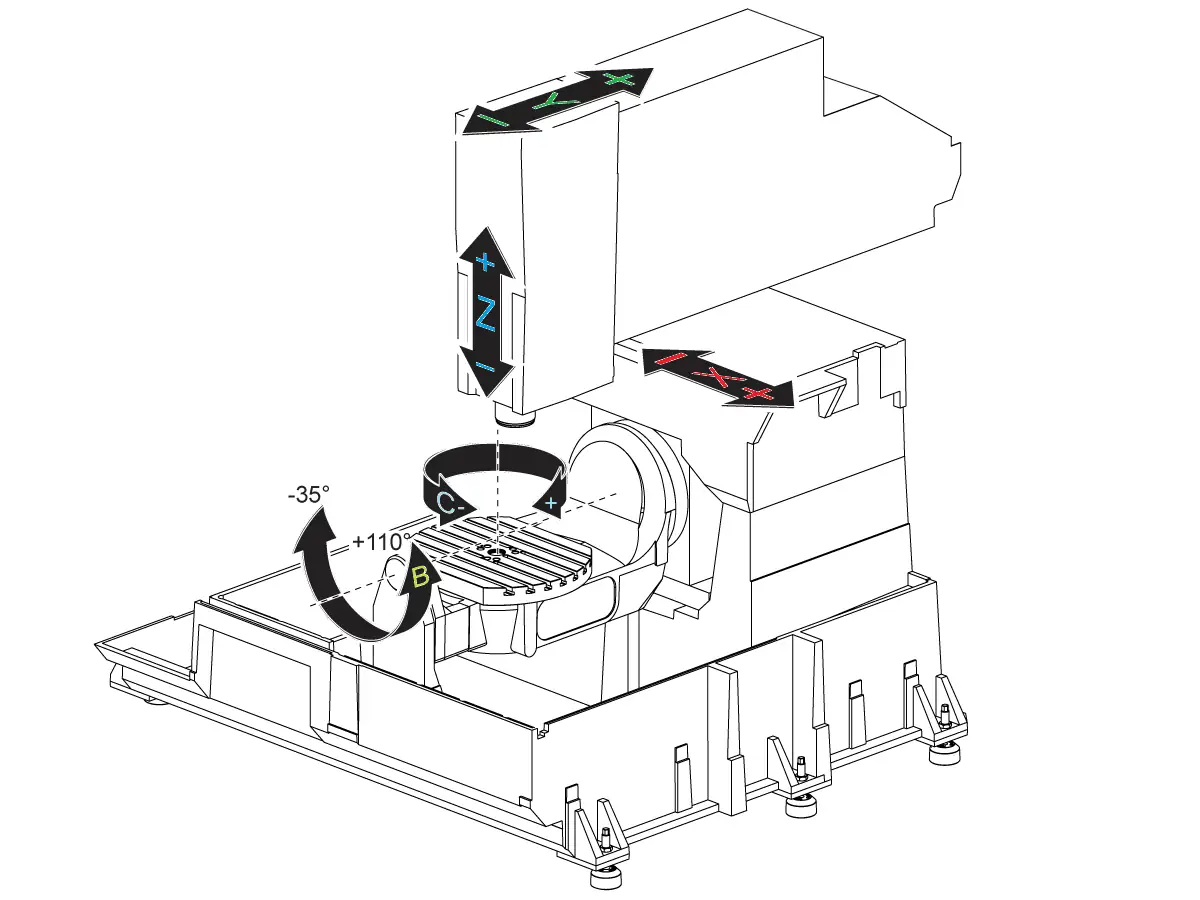
PART 1: FANUC 31i-B The Kinematic RealityFanuc dominates North American/Asian 5-axis shops (DMG MORI, Makino, Okuma). Its strength modular G-codes becomes a weakness when kinematics are ignored. On a head-table machine (e.g., Makino D500), the A/B axes pivot the spindle. A G-code error here doesn’t just misposition the tool it makes the entire head assembly… Continue reading Troubleshooting G-Code Errors in 5-Axis Milling
Names of axes in cnc machine

Understanding axis naming conventions in CNC (Computer Numerical Control) machines is critical for efficient programming, operation, and troubleshooting. Whether you’re working with a simple 2-axis lathe or a complex 12-axis mill-turn center, adhering to standardized axis nomenclature ensures precision and clarity. This post explains the rules governing axis naming, rooted in international standards, and provides… Continue reading Names of axes in cnc machine
Rough turning cycle

Rough turning is a foundational process in CNC machining, where excess material is rapidly removed to shape a workpiece close to its final dimensions. Efficient rough turning minimizes cycle time, reduces tool wear, and prepares the part for finishing. Central to this process is the rough turning cycle, a programmed routine that automates tool paths… Continue reading Rough turning cycle
Rotation Tool Center Point
The concept of Rotation Tool Center Point (RTCP) is a crucial feature in multi-axis CNC machining, particularly for 5-axis machines. It allows the tool to maintain a consistent orientation relative to the workpiece, even as the machine’s axes move. This is essential for achieving precise machining results on complex, three-dimensional parts. Key Points about RTCP… Continue reading Rotation Tool Center Point
Peck drilling cycle

Peck drilling cycle is a critical technique in CNC machining, especially for creating deep, precise holes while managing chip evacuation and tool longevity. Unlike standard drilling, which involves continuous cutting, peck drilling breaks the process into incremental steps, ensuring efficient material removal and reducing heat buildup. Let’s dive into the details of this essential cycle.… Continue reading Peck drilling cycle
Deep hole drilling cycle (Turning cycle)
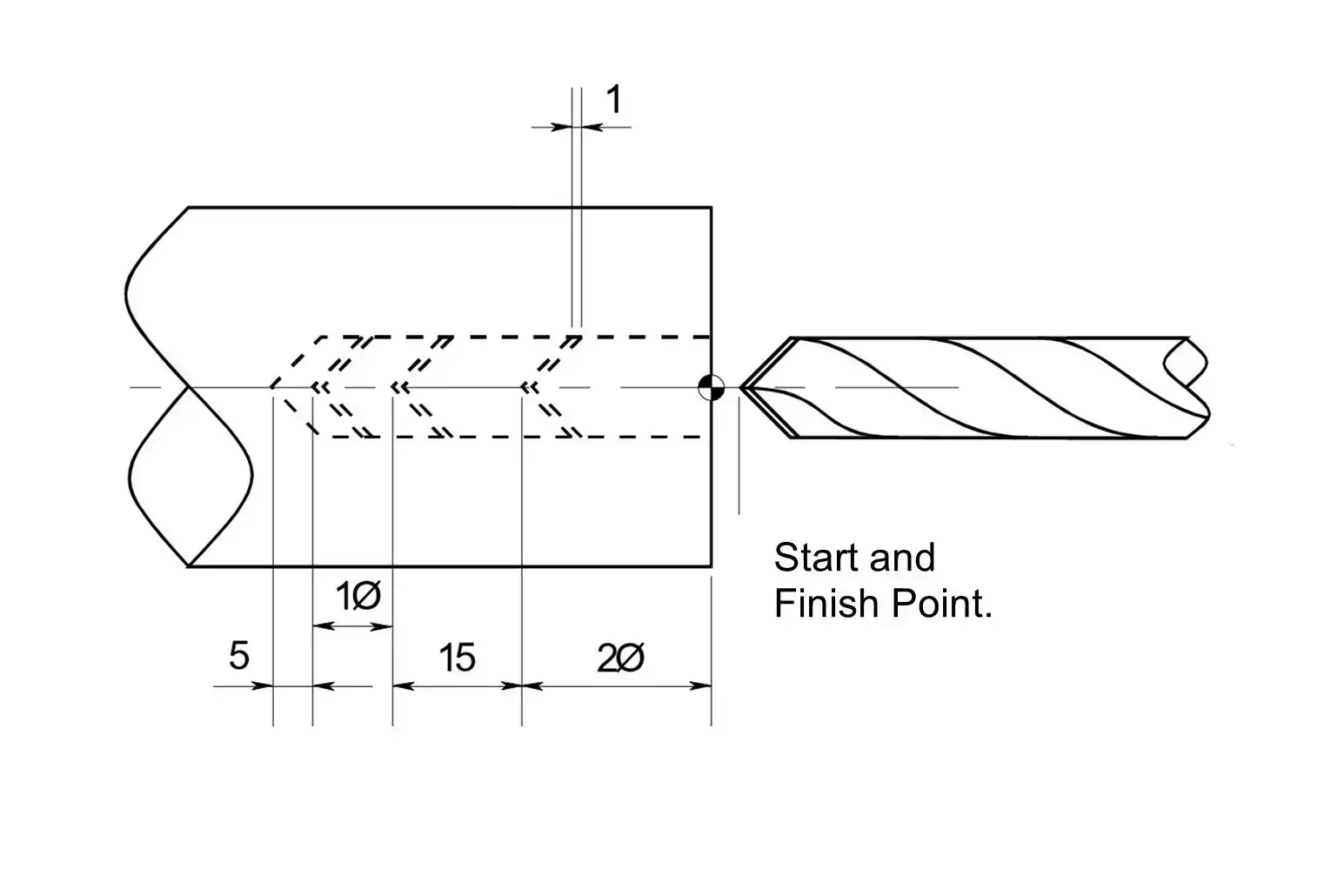
The Deep Hole Drilling Cycle is a specialized CNC machining operation used to drill deep holes in workpieces with high accuracy and efficiency. This process is often utilized in turning centers or lathes equipped with live tooling capabilities. The cycle is designed to handle the challenges associated with drilling deep holes, such as chip evacuation,… Continue reading Deep hole drilling cycle (Turning cycle)
Subprogram

Subprogram is like reusable “mini-program” within your main CNC program. Subprograms help reduce redundancy, save time, and make your code cleaner and easier to manage. Think of them as shortcuts that perform repetitive tasks without having to rewrite the same commands over and over again. In this guide, we’ll explain how to use subprograms with… Continue reading Subprogram
5-axis CNC machining

If you’ve ever wondered how complex, intricate parts like turbine blades, automotive components, or medical devices are manufactured with such precision, the answer often lies in 5-axis CNC machining. But what exactly is it? And why does it matter if you’re not a machinist? Let’s break it down into simple terms. What is 5-Axis CNC… Continue reading 5-axis CNC machining
Macro Programming
The macro language is a programming language that gives the CNC programmer the ability to write very flexible programs. This is done through the use of variables, mathematical expressions and program flow control statements. The macro language combined with standard G-code programming can create reusable programs much like canned cycles. These programs can do many… Continue reading Macro Programming