

Introduction In CNC programming, precision is paramount. A single misplaced decimal point or an incorrect unit of measurement can lead to costly errors, scrapped parts, or even machine damage. Two critical G-codes G20 and G21 form the foundation of dimensional accuracy by defining the unit system used throughout a CNC program. These codes ensure consistency… Continue reading G20 and G21 in CNC Programming
Tag: #CNCProgramming
Pattern repeating cycle
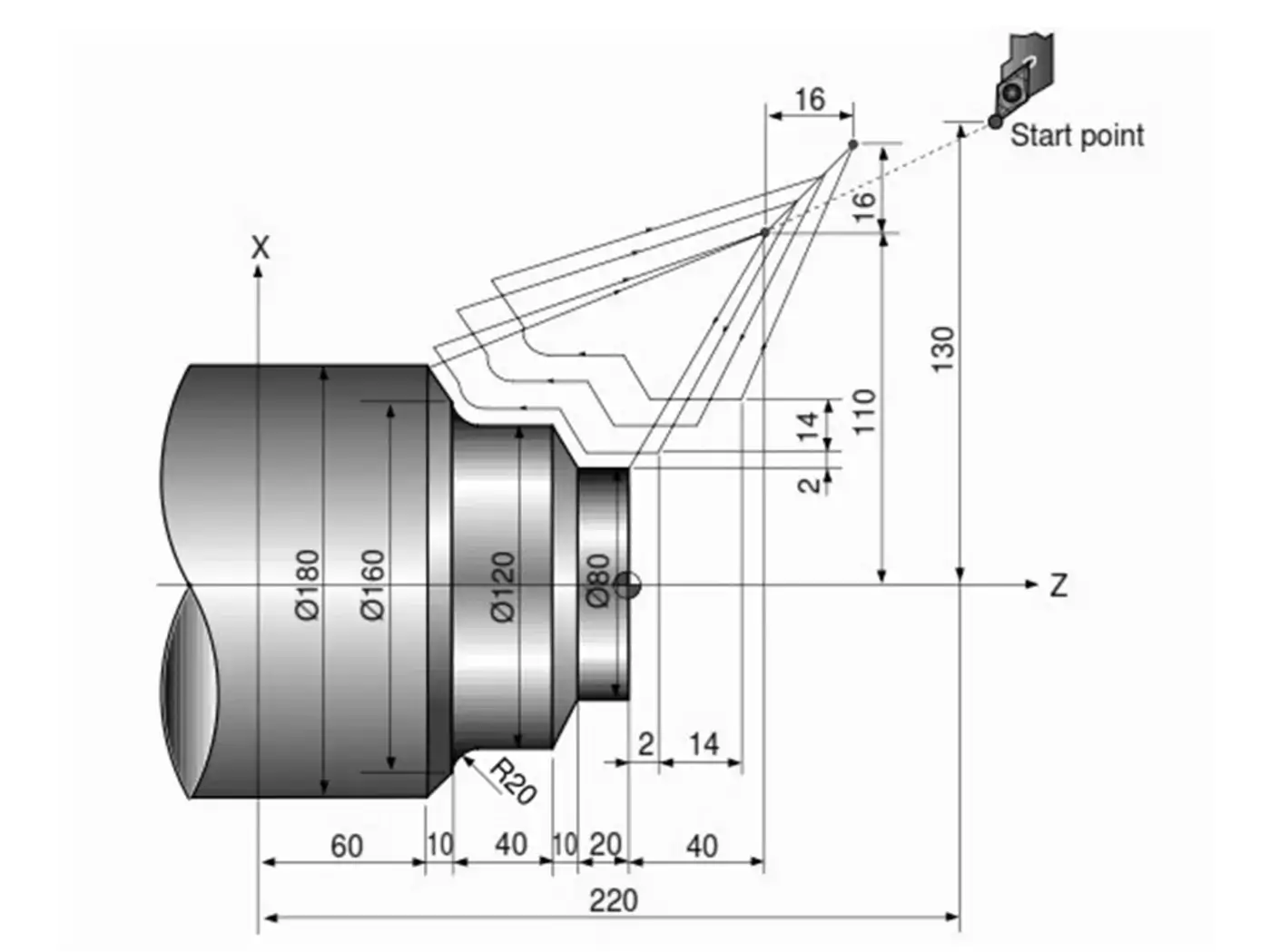
Pattern repeating cycles are indispensable tools in CNC machining, enabling programmers to replicate complex features—like grooves, threads, or contours—across a workpiece with precision and efficiency. By automating repetitive tool paths, these cycles reduce programming time, minimize errors, and ensure consistency. In this blog, we’ll explore how pattern repeating cycles function on three major CNC control… Continue reading Pattern repeating cycle
Rough turning cycle

Rough turning is a foundational process in CNC machining, where excess material is rapidly removed to shape a workpiece close to its final dimensions. Efficient rough turning minimizes cycle time, reduces tool wear, and prepares the part for finishing. Central to this process is the rough turning cycle, a programmed routine that automates tool paths… Continue reading Rough turning cycle
Grooving cycle

In CNC turning, grooving cycle isessential for creating precise recesses on cylindrical parts. The cycle automates repetitive operations, saving time and ensuring consistency. While the core concept remains the same across CNC controls, the syntax and programming structure vary between Fanuc, Sinumerik, and Heidenhain systems. This blog breaks down the syntax for each control and… Continue reading Grooving cycle
Threading cycle

Threading is one of the most common operations performed on CNC lathes. Whether you’re cutting external or internal threads, using a threading cycle helps automate the process, reduce programming time, and ensure consistent thread quality. In this blog post, we’ll explore what a threading cycle is and provide syntax examples for three of the most… Continue reading Threading cycle
Facing cycle (Turning cycle)

In CNC turning, a facing cycle is a critical operation for creating flat, perpendicular surfaces on the end of a workpiece. Whether you’re roughing or finishing, canned cycles simplify programming, reduce errors, and boost efficiency. This post explores how to implement facing cycles on three major CNC platforms: Fanuc, Siemens Sinumerik, and Heidenhain. What is… Continue reading Facing cycle (Turning cycle)
Block skip function

In CNC programming, block skip function is a feature that allows specific blocks (lines) of the program to be bypassed or skipped during execution. This is particularly useful when you want to temporarily disable certain parts of the program without deleting them entirely. For example, you might use block skip to jump over tool changes,… Continue reading Block skip function
Spindle function
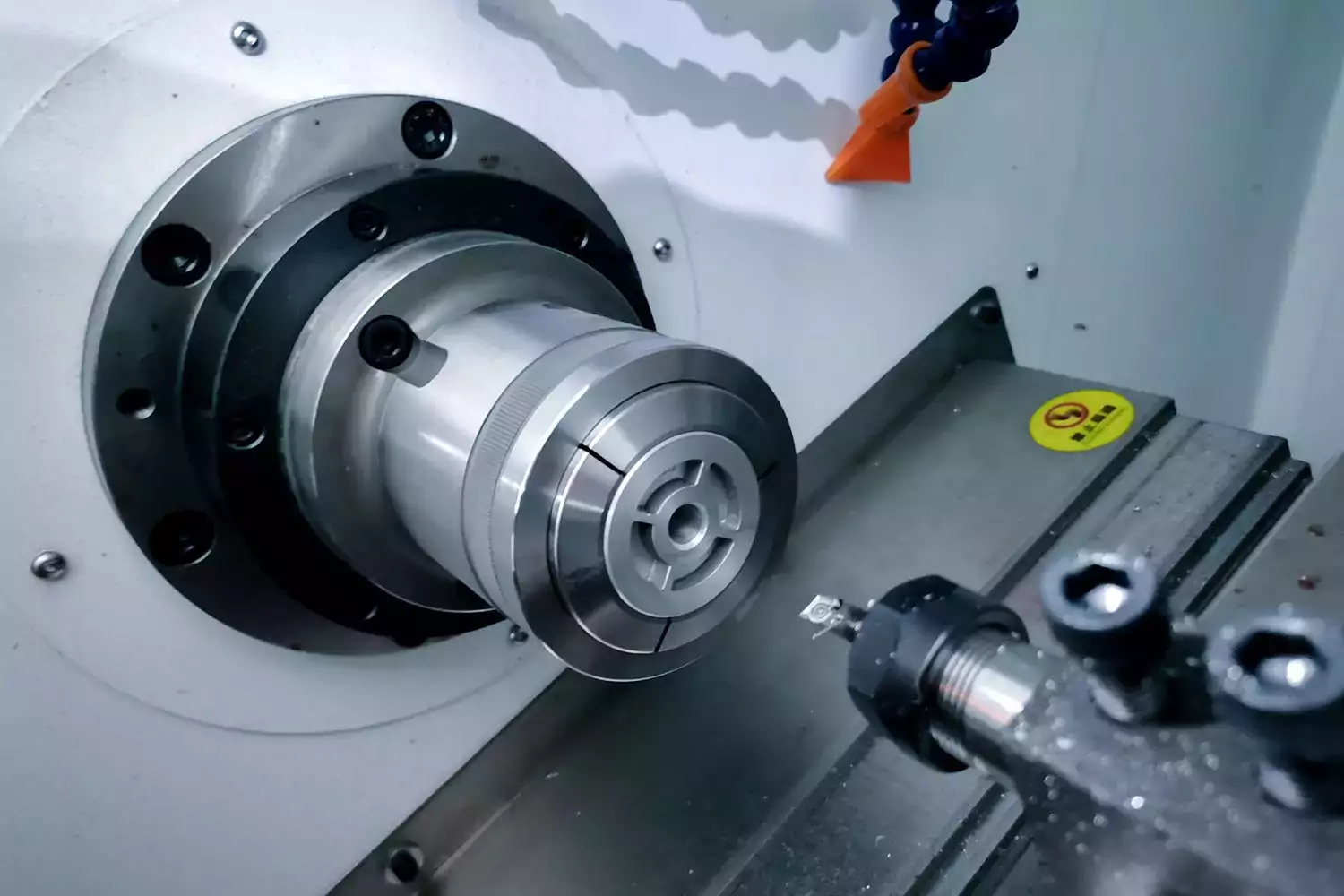
CNC programming is the backbone of precision machining, and at its core lies the effective control of the spindle. The spindle, responsible for rotating the cutting tool or workpiece, is governed by specific commands and parameters in CNC programs. Properly programming spindle functions ensures optimal performance, tool longevity, and part quality. In this post, we’ll… Continue reading Spindle function
G05 non standard G-code

The G05 G-code is a non-standard, machine-specific command that varies by CNC manufacturer and control system. Unlike standard G-codes (e.g., G00 for rapid movement or G01 for linear interpolation), G05 is not universally defined and may perform different functions depending on the machine tool or controller. Here’s a breakdown of its potential uses: Common Applications… Continue reading G05 non standard G-code
Peck drilling cycle

Peck drilling cycle is a critical technique in CNC machining, especially for creating deep, precise holes while managing chip evacuation and tool longevity. Unlike standard drilling, which involves continuous cutting, peck drilling breaks the process into incremental steps, ensuring efficient material removal and reducing heat buildup. Let’s dive into the details of this essential cycle.… Continue reading Peck drilling cycle
Turning Canned Cycle
Canned Cycle in CNC Machining A canned cycle is a pre-programmed sequence of G-code commands that automate repetitive machining operations, such as drilling, tapping, or boring. These cycles streamline programming by condensing multiple steps like positioning, cutting, retracting, and dwell times into a single command with user-defined parameters (e.g., depth, feed rate, retract height). Key… Continue reading Turning Canned Cycle
Fanuc M-Code G-Code list

Introduction to G Codes and M Codes Fanuc M-Code G-Code, G codes (preparatory commands) and M codes (auxiliary commands) are essential instructions used to control machine tools. These Fanuc M-Code G-Code vary slightly depending on the machine type (lathe, mill, etc.) and Fanuc control version. Always consult your machine’s manual for specifics. Common Fanuc G… Continue reading Fanuc M-Code G-Code list